Master Thesis
Low-Latency Multi-User Pose Tracking in Audience-Driven 180° Projection under Dynamic Lighting
Technologies
- RSView, Wireshark
- Python, C++
- DAPT
- PRN
| Platform | Linux |
| Year | 2026 |
| Location | Berlin, Germany |
| Developers |
|
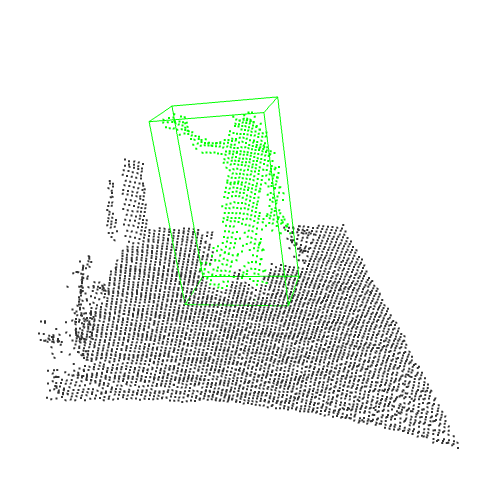
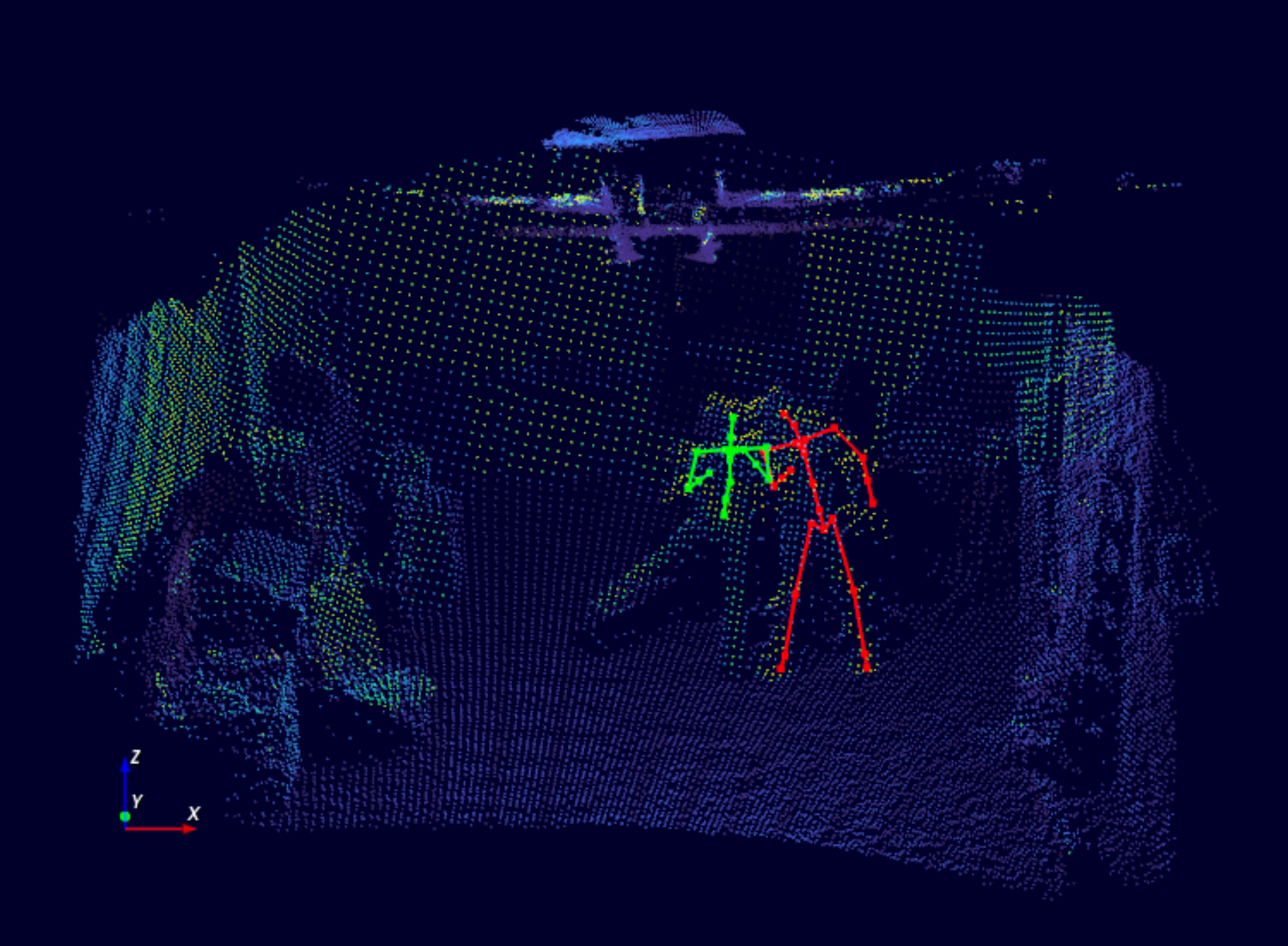
Reliable multi-user human pose estimation remains a key challenge across several domains, particularly in immersive environments where dynamic projection lightning can severely affect camera-based tracking systems. In recent years, LiDAR-based human pose estimation has emerged as a promising sensing approach for tracking human movement while preserving user privacy. However, most existing approaches target outdoor sensing scenarios, leaving their applicability to indoor environments largely unexplored.
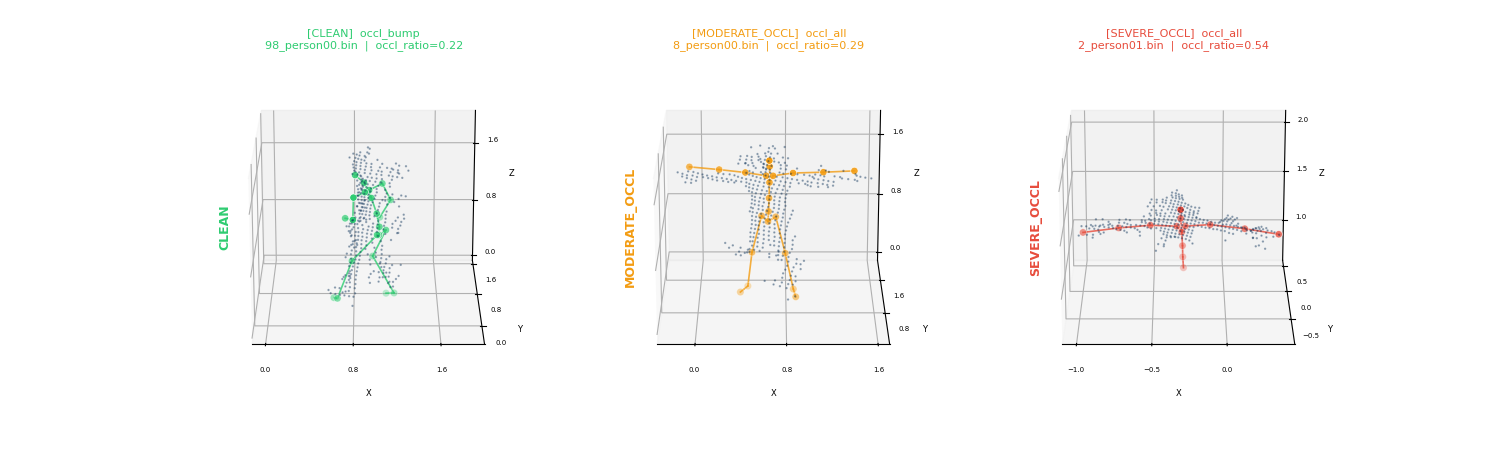
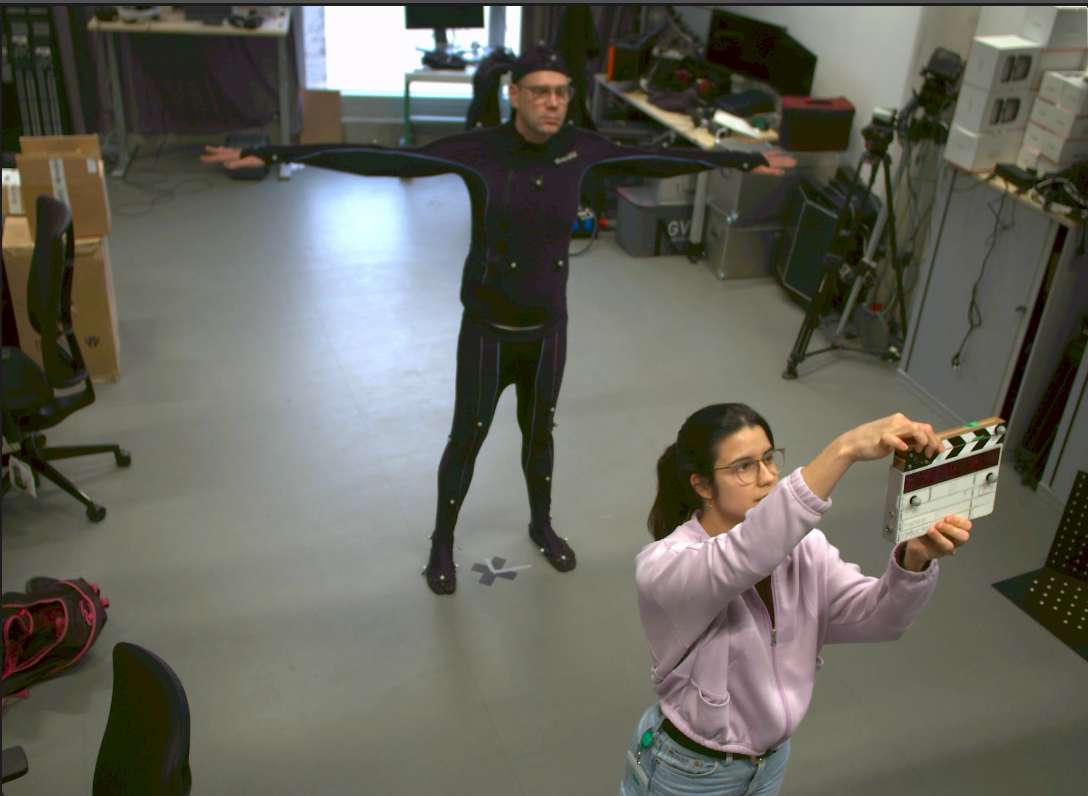
This thesis investigates which single-LiDAR-based human pose estimation method is better suited for deployment in audience-driven immersive environments, specifically in the TiME Lab at Fraunhofer Heinrich Hertz Institute (HHI). To address this objective, two pretrained AI-based pipelines, PRN and DAPT, were systematically compared using a dedicated evaluation dataset that was recorded in a motion capture studio with two participants, providing synchronized LiDAR point clouds and ground-truth skeletal data. The evaluation focused on accuracy, robustness and real-time performance. The pose estimation accuracy was assessed with a Wilcoxon signed-rank test across scenes. For the robustness study, all frames were classified according to occlusion levels and evaluated using a repeated measures ANOVA. Finally, real-time performance and scalability were examined by comparing the latency and throughput under an increasing number of parallel inference instances.
The results show that DAPT achieved higher pose accuracy, while PRN provides lower latency and higher throughput, revealing a trade-off between accuracy and computational performance. Considering the requirements of interactive immersive environments, where reliable pose estimates are critical, DAPT was selected as the preferred pipeline for deployment in the TiME Lab. These findings provide practical guidance for selecting LiDAR-based pose estimation pipelines for indoor settings and highlight their potential applicability to other domains such as industry, education, and location-based entertainment.